During the gawky, dark, painfully insecure pre and early-adolescent summers of my youth, I attended what was advertised as an “inter-faith, inter-racial” summer camp out in what was once the wilds of Connecticut, before it became greatly suburbanized. From what I could discern, at least in my age group and bunk, the token “inter-faith” ended up being only me and the “inter-racial” one other girl. I was a skinny, tiny, frizzy-haired horse freak, finding my comfort zone mostly down the sun-dappled dirt road where the horses were kept, and I spent a lot of time there in my own bubble.

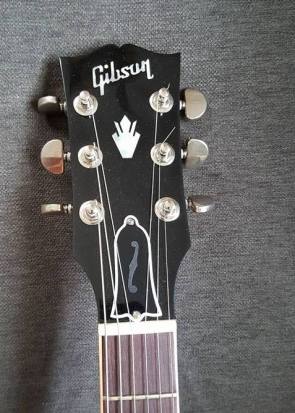
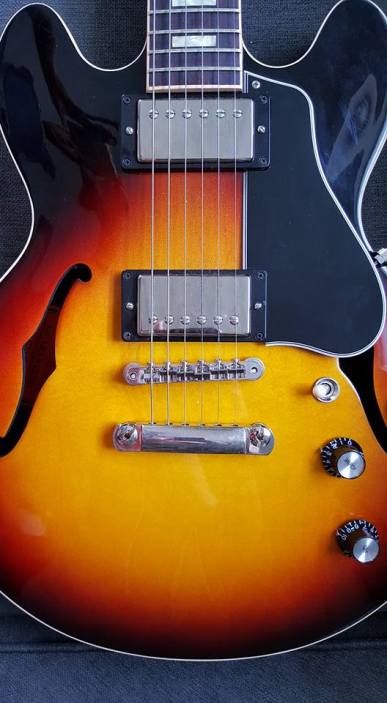
Amongst the bug juice, the folk songs and hopeless crushes on cute guys with Beatle haircuts from the boy’s bunk, I met a fellow camper named Fran. She too was a horse lover. She also struggled to tame her curls in the summer humidity. She was a bit aloof, with a dry sense of humor I could appreciate, and some special quality I couldn’t quite describe but was drawn to. We ended up becoming friends over those short weeks, trying to learn to play protest songs on acoustic guitar, talking about the boys we liked, fighting our hair to get it straighter, walking down to the field to round up the horses, groom them and ride. Once camp was over, we parted ways, not living near each other at all, but remained pen pals for a while. I attended a sleepover party or two with other campers at her parents’ house somewhere out on Long Island. Eventually the contact faded out.
Decades have gone by, leaving only a few powerful memories from that brief time. Outstanding is when the counselors took us to Newport Folk Festival, where I saw Bob Dylan put down his acoustic guitar and suddenly go electric. Some people in the crowd were booing in protest. I was standing way back, straining to see what was causing all the excitement. The other memory is of my friend Fran. Over the years I have often wondered where she ended up.

Fast forward and suddenly there is The Internet. Who hasn’t done a search to find those “Whatever Happened To” people? Periodically I would look up those whose lives had crossed paths with mine in the past. Surprisingly, I never located Fran, even though her last name was uncommon, her middle name distinctive enough that they should have stood out. With the advent of Facebook, it should have been even easier, but there was no sign of her that I could find. Sometimes when I would hear a certain song from that era or find an old photo from that time I would get a fleeting memory, but eventually stopped looking.
Fast forward again to last spring. I’m wasting time on the computer and suddenly got into my “Whatever Happened To” mode. I typed in Fran’s name. Her father’s obituary came up. A mention of her divorce. Oh, the amazing, scary, invasive marvel of the internet that tracks our lives! Now I had a last name, her married name, and I struck gold.
First I found her blog. Then I found her on Facebook. It amazed me that all these years later – we are talking over fifty years – she was still recognizable. In some of the photos she actually looked just like the girl I remember in our youth. She was specialized in a holistic approach to diet and healing. Her writing was intelligent and interesting. In reading her blog and posts on social media, there was so much that resonated with me, not only about her approach to healing but also the parallels in her life to mine. She had a following of people who she had helped who truly adored her. She was still into horses. Like me, she had two children and a little dog. I was floored. And excited. I sent her a message.
I’m sure my contact must have been both surprising and maybe a little bit weird to her. She told me she had blocked out a lot of things in her life during that time, those earliest of adolescent years apparently being equally as difficult for her as they were for me. She had snippets of camp memories here and there; the name of a guy with stringy hair at a party, the cute boy she liked. Honestly, I don’t think she remembered me at all, at least not at first, although she didn’t quite come out and say so. She was probably being polite. I wish I could have found the photo of us in our safety riding helmets with our frizzy hair pulled back, but it disappeared long ago, as did all those childhood letters I never saved. We messaged back and forth a bit over early summer. We shared a few personal incidents in our lives that were similar . It turns out she lived only an hour away from me and I told her I would like to come see her. She said she would be honored. My plan was to try to get there after the busy of summer was over, sometime this fall, and was actually looking forward to it.
A week ago, I learned via Facebook that Fran had passed away. She had been terminally ill, a disease not easily cured by either conventional or complimentary medicine, both of which she had been doing. It is clear her expertise helped ease her into her transition.
As we age this kind of terrible news about friends and family leaving us is becoming more frequent. Each time it knocks the wind out of us, leaves us reeling and gasping emotionally like fish out of water, has us re-examining our lives, perhaps vowing to make the most of the unpredictable time we have left.
I struggled over my feelings about Fran’s death. I didn’t know her as an adult at all, aside from the scraps of messages we recently shared and from reading her posts and articles. I barely knew her even back when we were young tweens so briefly in summer camp. We had not been in contact in over fifty years. And yet, it was as if I had suddenly found a glittering jewel on the beach, put it in my pocket to examine later and then discovered I had lost it before I got home. Beyond disappointed, I felt disoriented and definitely in mourning – for her life that ended at such an early age – my age; for her children and little dog left behind, and perhaps for a small sliver of my own past once again lost to the ages.
A memorial service in her honor was held this past weekend at her home. I felt compelled to go and yet feared I had no right to. My friend E., after commenting that weird things happen to me in general (and who, after I told her my friend’s name, happened to be a reader of the very same Fran’s newspaper column), said I might regret it if I didn’t attend. One of my daughters thought it actually would be a nice thing for someone from her far and long ago past to show up.
And so I drove up to my summer camp friend’s home, perched in a beautiful field overlooking the mountains on the bluest of days – clearly a sanctuary. Knowing nobody, I walked into her yard and was greeted by her friends who were welcoming, dispelling my fears of intrusion as irrational. The tributes given by her children and those close to her honored her spirit in the most touching of ways and words – it was clear her love and nurturing had raised very beautiful people. I could not help but think the quality and depth of the tribute was something I would have wanted for myself, and others echoed the same sentiment. Along with photos around her home and conversations with people there, many blanks were filled in, giving life and color to the years. She was loving and kind, decent, intelligent, resilient and strong in the face of adversity. I know without a doubt, had we connected, we would have become friends along the path again. I mourn the loss of that opportunity.

We were sent on our way with garden zucchini, a pot of chrysanthemums, essential oils and literature from her office. I teared up on the way home, realizing I was crying for losing another piece of my own past as much as for Fran and her family. Without a doubt, attending her memorial created some kind of closure for me. I had to wonder if she thought it strange, or merely saw it as part of the circle, by having a friend from half a century ago suddenly contact her out of the blue during her last few months earthside – oddly, perhaps, adding its own type of closure on those scattered fragments that make up a life.
~*~













 It was no secret our mother had actually bought the doll house for herself, not only as a reference to her Swiss roots, but more so to satisfy her own unfulfilled 1930’s childhood dream of a doll house. She shared many stories of playing with her best friend Lucy, whose father had built a spectacular doll house which she so coveted in her own impoverished life. Her glowing memories and descriptions were so vivid that she planted a fantastical image in my mind that most likely was greatly exaggerated. When my mother bought “the Swiss chalet” doll house, she let us have free range playing with it. Still, I remember the way she would look at the house and furniture pieces and could tell it meant much to her on many levels.
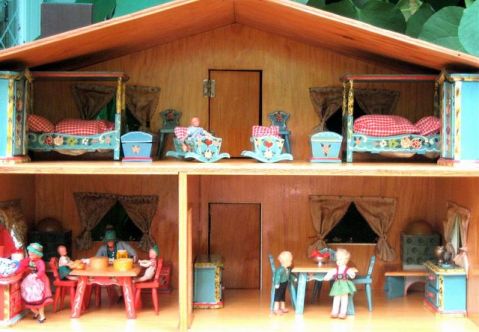 My siblings and I, staggered in ages over a span of eight years, would come together in different configurations as we wedged our bodies close together in front of the open side of the house to play. Many scenarios would be orchestrated. We even developed our own short hand and sound effects. Thus amp-bump was born.
 We moved across the country. The Babies (“We’re not babies anymore!” said with indignation) had reached the age where they were not playing with the doll house. My mother carefully packed up the furniture, but somehow in the final moments the doll house itself did not make it onto the moving van. In haste, one of the last things my mother did as she was saying good-bye to relatives was to bring the Swiss chalet to my aunt and uncle’s house and ask if she could store it there until we could get it at a later time. I remember my aunt saying “Sure, it will be there for you”, and carefully placing it in the basement with a towel over it. That was the last we ever saw of it. My aunt, uncle and cousins have no recollection of the doll house, although my mother always suspected it was given away to one of the relatives on the other side of their family.
 I searched everywhere to try and locate the exact replacement. The pieces were so nicely made that I was sure it must have come from F.A.O Schwarz back in the 1960’s. I looked at flea markets, tag sales, antique shops and eBay, hoping to someday surprise her, imagining the look on her face when she received it and lovingly placed the remaining furniture inside. But I never did manage to find one for her. And then one day she passed away.
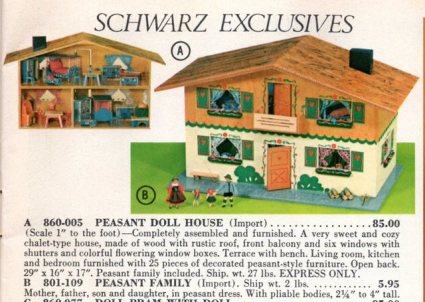 There is nothing spectacular about the house. My own daughter’s doll houses were elaborate dwellings made from kits, with many rooms, realistic furniture, wall paper, flooring, roof shingles, siding and carpeting, and even electricity – much, much grander than the simple three room Swiss chalet of our youth. And yet, all that size, those details, are clearly not necessary catalysts to bring forth what can come from a child’s imagination.

 person despite her demeanor. Those declarations of love could just be an illusion. That aloofness might just be armor.